
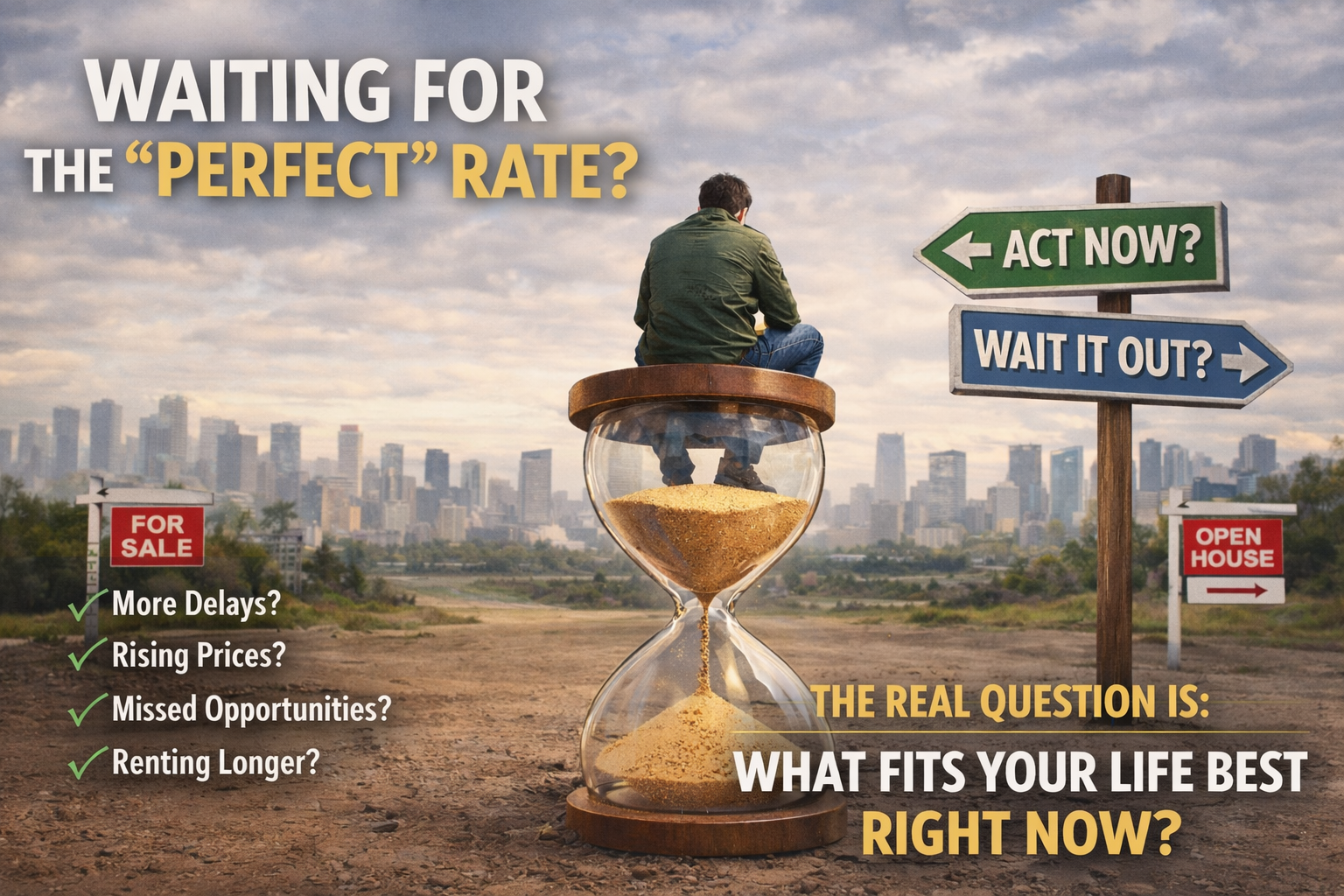
When interest rates are the headline everywhere, it can feel like the “smart” move is to wait. Wait for the next announcement. Wait for a better rate. Wait until it’s obvious.
And if you’re thinking about buying or selling, that noise can make even simple decisions feel heavy.
Here’s the calm truth: sometimes waiting is the right call. But waiting just because rates might drop isn’t always the best plan—especially if it keeps you stuck, stressed, or missing opportunities that matter more than the rate itself.
The goal isn’t to time the market perfectly. The goal is to make a decision that fits your life and protects your options.
The calm starting point
Before you look at listings, rate forecasts, or the latest hot take, it helps to name what you actually need:
- a home that supports your day-to-day life
- a payment you can live with comfortably
- a timeline that fits your real world
- a plan that keeps your future flexible
Because the most important part of the decision isn’t “Is this the lowest rate possible?” It’s: “Can I make this work well, even if things change?”
Rates matter. They just aren’t the only thing that matters.
The market is not one thing
People talk about “the market” like it’s a single entity, but it’s really a collection of micro-markets:
- by neighbourhood
- by price range
- by property type (condos, duplexes, detached, acreage)
- by condition (move-in-ready vs. needs work)
- by timing (seasonality still plays a role)
That’s why the most helpful question usually isn’t, “Is it a good market?” but:
“Is this a good fit for my plan right now?”
A rate drop doesn’t automatically create a better buying situation if it also triggers more competition or higher prices. And a higher rate doesn’t automatically mean “bad timing” if you’re buying smart and protecting your flexibility.
Why waiting can feel safe (and why it isn’t always)
Waiting feels safe because it feels like control. If you don’t move, you can’t make a mistake.
But the real risk is that waiting can quietly cost you in ways that don’t show up in a rate quote.
For buyers, waiting can mean:
- paying rent longer (with no equity growth)
- missing listings that fit your actual needs
- watching prices rise faster than rates drop
- increased competition later if rates fall and demand surges
For sellers, waiting can mean:
- more listings coming to market later (more competition for you)
- fewer serious buyers if affordability tightens further
- delaying a move that your family or lifestyle is already ready for
Sometimes “waiting for the perfect time” becomes a habit. And habits can be expensive.
The rate isn’t the whole cost of buying
It’s completely reasonable to care about interest rates—they affect monthly payments and overall borrowing cost.
But here’s what matters just as much:
- purchase price (and what negotiation room you have)
- competition (multiple offers change everything)
- your down payment and cash reserves
- your timeline (moving costs, lease endings, life changes)
- the type of mortgage and features (prepayment options, portability, term length)
A lower rate on a higher purchase price can leave you in the same monthly payment range—or worse—than a slightly higher rate with a better price and less competition.
The part people don’t talk about: refinancing is a strategy
Many buyers assume they need to lock in “the best” rate to make the purchase make sense.
But in reality, a common strategy is:
- buy when the home and numbers make sense today
- choose a mortgage structure that fits your risk comfort
- refinance later if rates improve (when it’s financially worthwhile)
This isn’t about gambling. It’s about choosing a plan that works now, while keeping options open.
The key is not to overextend yourself based on the hope of future rate drops. You want a payment you can handle confidently even if rates stay where they are.
A practical checklist you can use today
If you’re stuck in “wait or go” mode, here’s a grounded way to think through it.
If you’re buying:
- List your non-negotiables (3 items) and your nice-to-haves (5 items)
- Define your comfort payment (not your maximum)
- Build a “must be true” list: location needs, parking, pets, schools, accessibility, commute
- Decide your timeline in plain language: “we’d like to move before summer” or “we can wait until fall if needed”
- Make sure you have a buffer: repairs, moving costs, and life surprises happen
If you’re selling:
- Ask what you’re gaining by waiting (be specific)
- Consider what you’ll do if you list later: buy after? rent? move within the city?
- Prepare your home like a product: small repairs, declutter, clean, photo-ready
- Pay attention to your micro-market (your neighbourhood and price band)
- Don’t underestimate strong pricing and presentation—those matter in any rate environment
When waiting can be the right plan
Waiting makes sense when:
- your job or income is uncertain
- you don’t have a solid emergency fund
- you’re carrying high-interest debt that should be tackled first
- you’re not clear on your timeline or needs
- your pre-approval numbers feel tight or stressful
In other words: waiting is wise when it gives you time to strengthen your position, not when it’s based on fear.
If waiting helps you save more, reduce debt, or clarify your plan, that’s not “doing nothing.” That’s preparing strategically.
When waiting can backfire
Waiting can hurt when:
- your rent is rising and you’re ready to own
- you’re holding off on a move your family genuinely needs
- you’re hoping for a rate drop but ignoring prices and competition
- you’re watching good-fit homes come and go while you feel stuck
- you’re emotionally exhausted by uncertainty and need a clear direction
Sometimes the biggest cost isn’t financial—it’s mental. Living in limbo is draining.
The bottom line: the best plan is the one that fits your life
Rates are important, but they’re not a complete plan.
A good plan considers:
- your payment comfort
- your timeline
- the type of home and neighbourhood you need
- your flexibility if life changes
- the micro-market you’re actually buying or selling in
If you find a home that truly fits, and the numbers are comfortable with room to breathe, waiting purely for a lower rate isn’t always the “smart” move.
The smartest move is the one that supports your life now—and keeps you stable later.
If you want, tell me your general timeline and whether you’re buying or selling, and I can help you build a simple “go vs. wait” decision map that feels clear and grounded.
Posted by Reuben Tucker on
Enjoy this blog post? Click here to subscribe for updates
Leave A Comment