
Real estate decisions often feel bigger when there is a lot of noise around them. Interest rates, headlines, outside opinions, and well-meaning advice from family and friends can all make the process feel heavier than it needs to be. The goal is not to rush into a decision or add more pressure. The goal is to help you feel clear, grounded, and informed as you move forward.
Before you start looking at listings or worrying about timing, it helps to come back to the basics. What do you actually need from your next home? In most cases, the answer starts with three things: a home that fits your day-to-day life, a payment that feels comfortable month after month, and a plan that protects your future flexibility. When you begin there, the process becomes much easier to manage emotionally.
Moving is not only a financial decision. It is also an emotional one. Even when the move is exciting and positive, it can still bring a mix of emotions that may surprise you. You might feel hopeful one moment and overwhelmed the next. You may feel excited about a fresh start, while also feeling grief about leaving a familiar space behind. Some people feel guilt, anxiety, or uncertainty, especially if the move involves children, changing routines, or leaving a neighbourhood they love. All of this is normal. Planning helps, but so does simply acknowledging that moving can bring a lot of feelings with it.
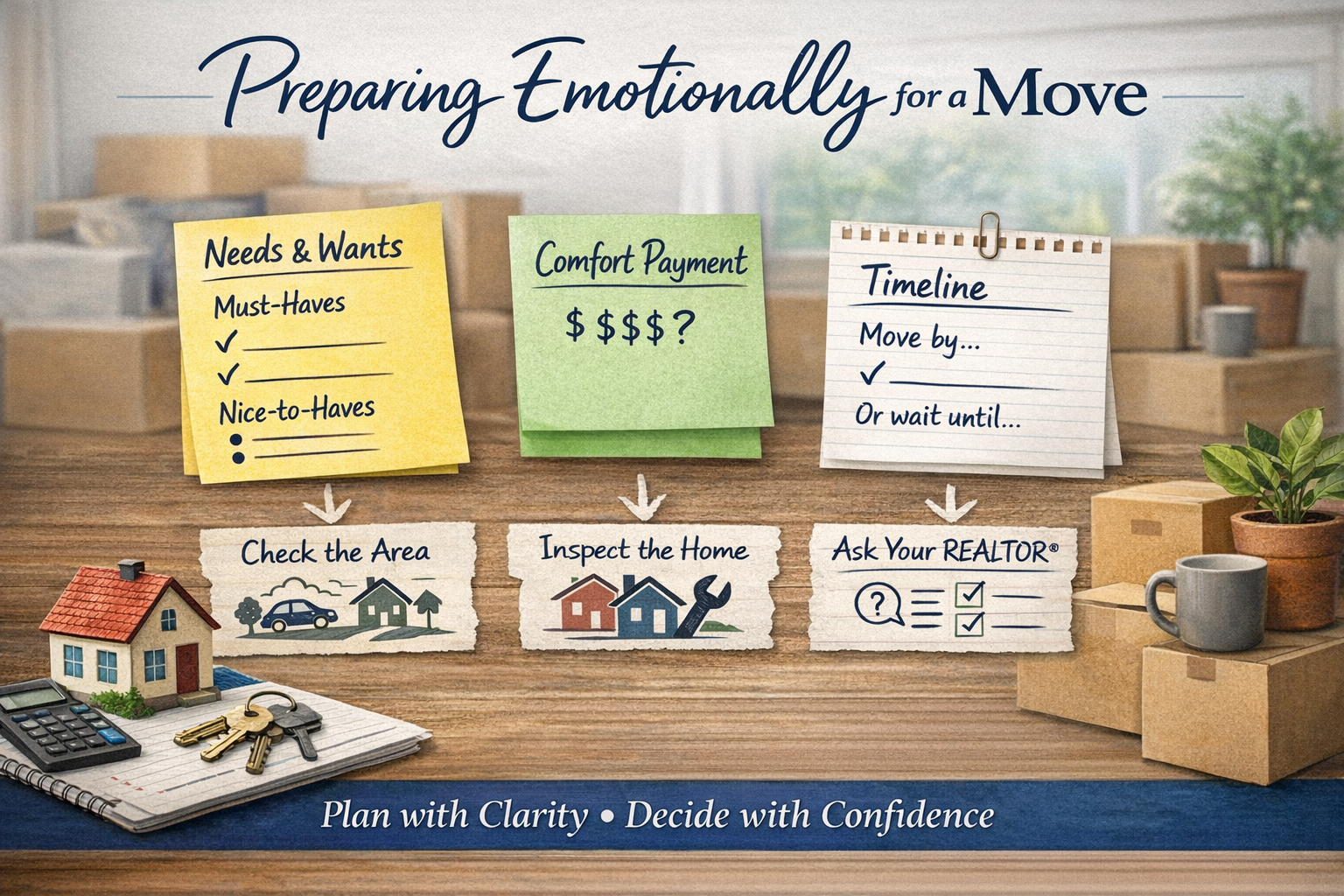
One of the best ways to ease the emotional side of a move is to create clarity early. Start by listing your non-negotiables. If you are buying a home, write down the three things that absolutely must be true for the property to work for your life. Then create a second list of five nice-to-haves. This helps separate what truly matters from what is simply a bonus. It also makes decision-making much easier when emotions start to run high.
Next, define your comfort payment, not your maximum payment. There is a big difference between what you may qualify for and what you will actually feel at peace carrying each month. Give yourself room for everyday life, unexpected expenses, and future plans. A home should support your lifestyle, not stretch it so tightly that you lose peace of mind.
It is also helpful to make a “must be true” list. This can include location needs, parking requirements, pet considerations, accessibility, commute times, school priorities, or future family plans. These details matter because they shape how well a home will function for you over time. A beautiful home that does not support your actual life can quickly become a source of stress.
Your timeline matters too. Instead of using vague language, define it in a simple and honest way. You might say, “We would like to move before this date,” or “We can wait until that date.” That kind of clarity helps reduce panic and keeps you from making emotional decisions based on pressure rather than readiness.
Another smart step is to book one professional conversation. Speaking with a mortgage broker or lender, along with a trusted REALTOR®, can turn guesses into numbers and possibilities into a practical plan. That alone can ease a lot of the emotional weight, because uncertainty often feels harder than reality.
There are also a few common situations that tend to bring extra emotional stress during a move. One example is loving a house but feeling uncertain about the neighbourhood. In that case, try the three-visit rule. Visit the area in the morning, again in the late afternoon, and then after dark. Pay attention to noise, traffic, lighting, and how the area feels when you are not in “showing mode.” This gives you a much more realistic sense of daily life there.
Another common scenario is finding a home you love that happens to be older. Older homes can be wonderful. They often come with larger lots, mature neighbourhoods, and a lot of character. The key is to focus on the major systems rather than getting distracted by cosmetic details. Look closely at the roof, windows, grading, electrical, plumbing, heating, and any signs of moisture. Cosmetic updates can often be planned over time. Water issues and structural concerns need real clarity from the start.
Many buyers also worry about making the “wrong” move. That fear is understandable, but perfection is rare in real estate. A good decision is not about finding a flawless home. It is about choosing a home that fits your budget, supports your lifestyle, aligns with your timeline, and still lets you sleep well at night. That is often the most realistic and healthiest definition of a good move.
If you are feeling uncertain, it can help to ask your REALTOR® direct questions. You might ask, “What are the three risks in this property, and how do we reduce them?” You can also ask, “If we owned this for five years, what upgrades would matter most?” Another important question is, “What is the realistic worst-case scenario here, and what would our plan be?” And perhaps the most grounding question of all is, “What would you do if this were your family buying?” These kinds of questions invite honest, practical guidance and help you move from emotion to clarity.
Preparing emotionally for a move does not mean eliminating every fear or question. It means giving yourself tools, support, and space to make a thoughtful decision. When you take the time to understand your needs, define your comfort zone, and ask the right questions, the process becomes much more manageable.
If your next move still feels like a “maybe,” that is okay. Sometimes the best next step is not a major decision. It is simply creating a plan. A neighbourhood shortlist, a realistic payment range, and a step-by-step path forward can make the entire process feel lighter and easier to handle. You do not have to figure it all out at once. You just need a clear next step.
Posted by Reuben Tucker onEnjoy this blog post? Click here to subscribe for updates
Leave A Comment